Meet the AAC Communication Advocates Behind Resources at Lakeshore Speech
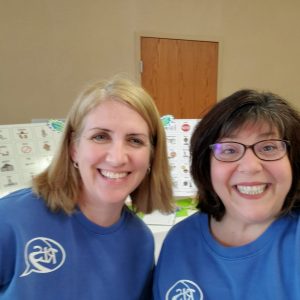
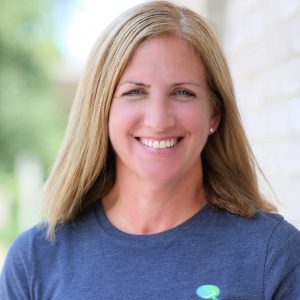
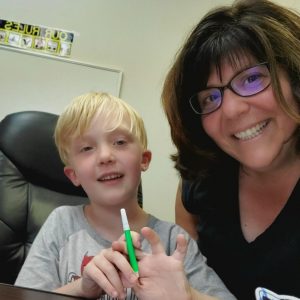
At the heart of Resources at Lakeshore Speech, LLC are two dedicated AAC communication advocates and ASHA-certified Speech-Language Pathologists: VernaAnn Kotansky and Ellen Spear. With a combined six plus decades of clinical practice, our founders didn’t just start a business; they launched a movement to ensure that every public space—from the local playground to the community pool—speaks the language of inclusion.
From Clinical Practice to Community Impact
VernaAnn and Ellen spent years in the trenches of speech therapy, working one-on-one with nonverbal and minimally verbal communicators. They saw firsthand the “communication gap” that occurs when a child leaves the clinic or classroom and enters a public space. Without their high-tech AAC devices or school-based supports, these individuals often lose their ability to interact with peers.
This clinical insight led to the creation of Resources at Lakeshore Speech’s specialized communication boards. Unlike generic signs designed by graphic artists, our boards are Speech-Language Pathologist designed, ensuring that the vocabulary, symbol placement and color-coding follow established linguistic principles like the Modified Fitzgerald Key.
VernaAnn Kotansky, MA CCC/SLP – A Lifetime of Advocacy
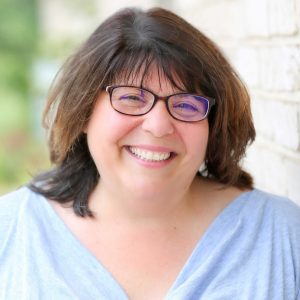
VernaAnn Kotansky is a practicing SLP and a fierce AAC communication advocate. Her career has been defined by a “client-first” philosophy. She believes that communication is a fundamental human right, not a privilege. Her expertise lies in bridging the gap between complex therapeutic concepts and practical, real-world applications. When you work with VernaAnn, you are benefiting from a career spent navigating the nuances of language development, motor planning and sensory processing.
Ellen Spear, MA CCC/SLP – Visionary for Inclusive Spaces
Ellen Spear brings a unique vision to the team, focusing on the intersection of public accessibility and therapeutic intervention. Her dedication to making AAC accessible in public spaces has helped municipalities and schools transform their environments. As a Vice-President and Co-Founder, Ellen ensures that every board produced by Resources at Lakeshore Speech meets the highest standards of “Symbol Transparency”—making sure the icons are intuitive not just for the AAC user, but for the peers and caregivers who play alongside them.
Why Clinical Expertise Matters in Communication Board Design
When searching for AAC communication advocates, it is vital to look for the “CCC-SLP” credentials. This “Certificate of Clinical Competence” from the American Speech-Language-Hearing Association (ASHA) signifies a level of expertise that goes beyond simple sign-making.
Linguistic Mapping: We understand how a child’s eye moves across a board. We place “Core Vocabulary” in consistent locations to foster motor memory.
Sensory Considerations: We select materials (like our matte-finish Aluminum Alloy) that account for light sensitivity and tactile needs.
Inclusive Vocabulary: Our boards aren’t just for requesting; they are for joking, protesting and social connection—the full spectrum of human language.
A Women-Owned Small Business with a National Mission
As a woman-owned small business, Resources at Lakeshore Speech, LLC offers a level of personalized support that large corporations cannot match. When you call or email us, you aren’t reaching a call center; you are reaching VernaAnn or Ellen.
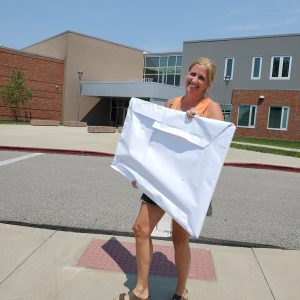
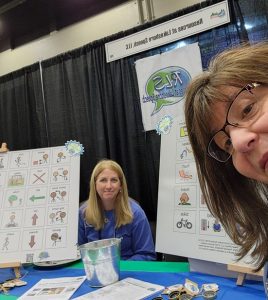
Whether we are presenting at national parks conferences or hand-delivering a board to a local school, our mission remains the same: to build inclusive communities where everyone has a voice.
The Clinical FAQ – Insights from our SLP Founders
Because Resources at Lakeshore Speech is owned and operated by practicing Speech-Language Pathologists, we receive many technical questions from school boards, park directors and fellow clinicians. Below, VernaAnn and Ellen answer the most frequent inquiries regarding the clinical application of our boards.
Q: Why does Resources at Lakeshore Speech prioritize “Core Vocabulary” on its boards?
VernaAnn: In the world of speech therapy, “Core Vocabulary” refers to the small set of high-frequency words (like go, want, more, help, stop) that make up about 80% of what we say in daily life. Unlike “Fringe Vocabulary” (specific nouns like swing or slide), core words can be used across almost any activity. By prioritizing these on our playground communication boards and clinic communication boards, we give the user the most “bang for their buck” linguistically. It allows a child to say “Go” whether they want to go down the slide, go to the car or go to the bathroom.
Q: What is the clinical benefit of using SymbolStix© and Boardmaker©?
Ellen: Consistency is the heartbeat of language learning. Most students using AAC in schools are already trained on Boardmaker (PCS) or SymbolStix icons. If a child uses a specific icon for “Help” on their tablet in class, seeing that exact same icon on a large pool communication board at the local YMCA provides “symbol transparency.” It reduces the cognitive load of having to learn a new “visual dialect,” making the transition to public communication seamless and successful.
Q: Why is color-coding, likethe “Modified Fitzgerald Key”, so important?
VernaAnn: This is a research-based system where icons are color-coded by their grammatical category—for example, yellow for nouns (people/things), green for verbs (actions), and blue for descriptors (adjectives). This isn’t just for aesthetics; it helps the brain “map” the board. Over time, the user doesn’t have to “read” every icon; they know that if they want an action, they look at the green section. This builds motor memory and helps emerging communicators begin to understand the structure of a sentence.
Q: How do these boards support “Natural Environment Teaching” (NET)?
Ellen: As therapists, we know that some of the best learning happens outside the four walls of a clinic. This is called Natural Environment Teaching. By placing emotional balance boards in a “calm-down corner” or a communication board at a public park, we are moving therapy into the real world. It allows caregivers and peers to model language in the moment, which leads to much better generalization of skills than practicing in a vacuum.
Q: Why did you choose Aluminum Composite and Coroplast over standard vinyl or wood?
VernaAnn: From a clinical perspective, we have to consider sensory processing. Standard vinyl or laminated signs often have a high-gloss finish that creates a “sun flare” or glare. This can be physically painful or visually confusing for individuals with Cortical Visual Impairment (CVI) or light sensitivity. Our aluminum and coroplast boards have a matte finish to prevent this. Furthermore, in a clinic setting, the boards must be scrubbed with medical-grade disinfectants. We chose materials that wouldn’t delaminate or fade, ensuring the “visual voice” of the clinic remains clear and professional for years.
Q: Can these boards be used for neurotypical children as well?
Ellen: Absolutely! This is the core of “Universal Design.” While we design them as AAC communication advocates, these boards benefit everyone. They help toddlers who are just learning to label their world, they assist individuals who speak English as a second language (ESL), and they provide a visual safety net for any child who might become “speechless” due to overwhelming emotions or physical exhaustion at the park.
**Collaborative Play:**
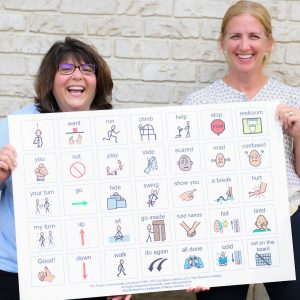
Playground Communication Boards encourage collaborative play by enabling children to coordinate their actions, share ideas, and work together on imaginative scenarios.
**Parent and Educator Involvement:**
Parents, caregivers, and educators can actively engage with children using Playground Communication Boards on the playground, creating meaningful learning experiences and supporting language development.
**Awareness and Acceptance:**
The presence of Playground Communication Boards in playgrounds helps raise awareness about different forms of communication and promotes a culture of acceptance and understanding among children.
**Future Skills Development:**
Effective communication is a critical life skill. Introducing children to Playground Communication Boards at a young age can contribute to their overall communication skills and prepare them for diverse communication environments.
In Closing
Playground Communication Boards can create enriching and empowering playground experiences for all children.